
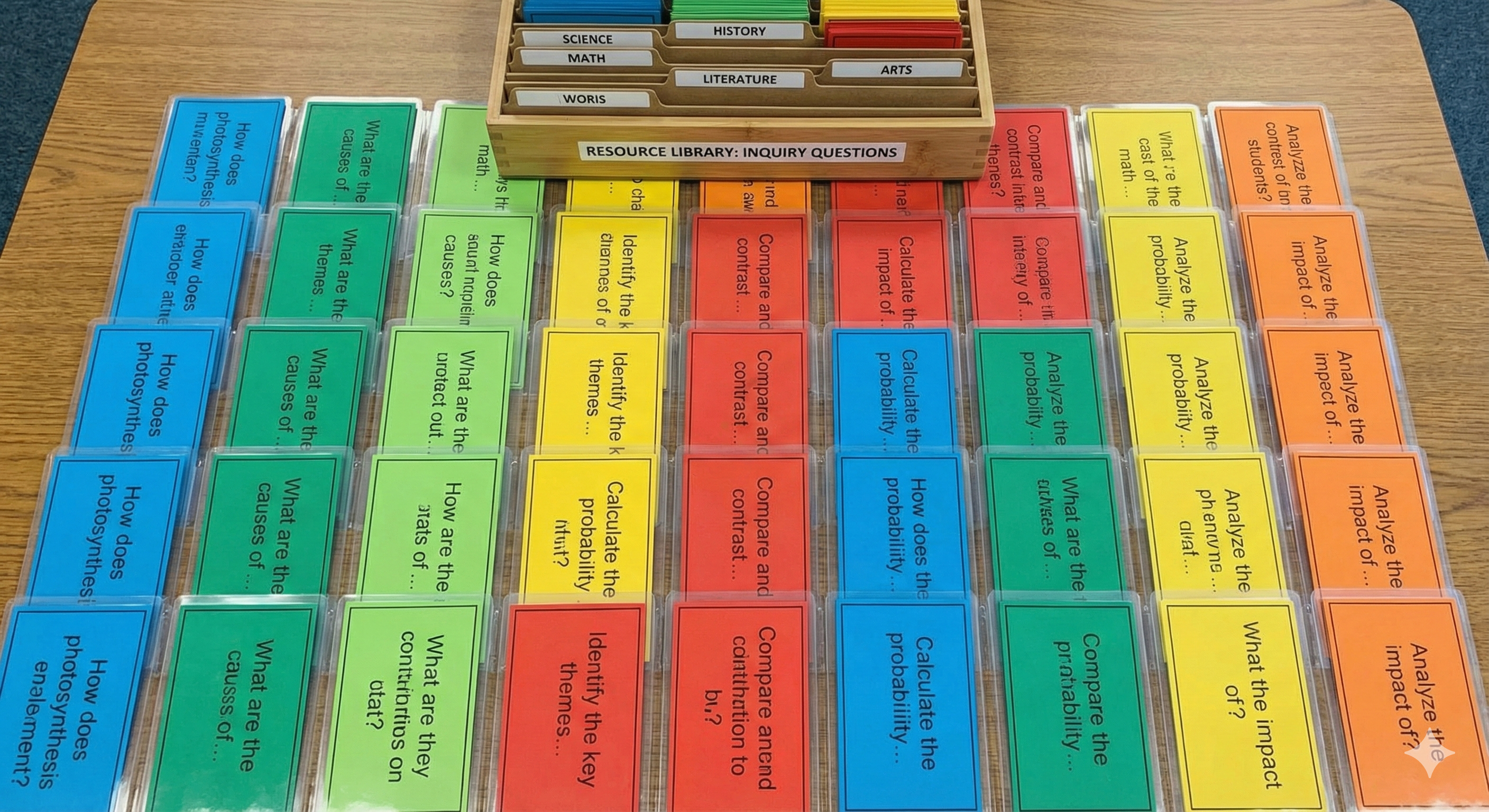
What Are 50 Good Questions? A Ready-to-Use Bank for Every Classroom
Having good questions ready transforms teaching. Rather than improvising under pressure or defaulting to basic recall, a prepared question bank ensures every lesson includes thought-provoking prompts. Here are 50 good questions organised for practical classroom use.
Discussion Starters (Questions 1-10)
- What surprised you most about today's topic?
- How does this connect to something you already knew?
- What would you like to understand better?
- If you could ask an expert one question, what would it be?
- What's the most important thing to remember from this lesson?
- How might someone disagree with what we've learned?
- What made you think differently today?
- How would you explain this to a friend?
- What questions do you still have?
- What would you do with this knowledge outside school?
Critical Thinking Prompts (Questions 11-20)
- What evidence supports this claim?
- What assumptions are being made here?
- How might this look from a different perspective?
- What are the strengths and weaknesses of this argument?
- What information would help you decide?
- How reliable is this source, and why?
- What might be missing from this account?
- How could you test whether this is true?
- What would change your mind about this?
- What are the consequences of being wrong?
Creative Exploration (Questions 21-30)
- What if this had happened differently?
- How might this problem be solved another way?
- What connections can you see between this and [other topic]?
- How might you represent this information visually?
- What would make this more interesting?
- How might this look in 100 years?
- What new question does this raise?
- How might you improve on this approach?
- What patterns do you notice?
- What would you do if there were no constraints?
Application and Transfer (Questions 31-40)
- When might you use this knowledge?
- What job requires understanding this?
- How does this apply to your own life?
- What decision might this help you make?
- How might this change your behaviour?
- What would you advise someone facing this situation?
- How does this connect to current events?
- What skill is this developing?
- How might you teach this to others?
- What real-world problem does this relate to?
Reflection and Metacognition (Questions 41-50)
- What was easiest to understand, and why?
- What did you find most challenging?
- How did your thinking change during the lesson?
- What strategy helped you learn this?
- What would you do differently next time?
- Where do you see yourself improving?
- What confused you initially that now makes sense?
- How confident do you feel about this topic?
- What do you need to practise more?
- What are you proud of from today's work?
Using These Questions Effectively
Timing Matters
Don't fire questions rapidly. Quality questions deserve thinking time. Count silently to five before accepting responses.
Distribution Matters
Avoid allowing the same students to dominate. Random selection keeps everyone engaged and ready to respond.
Responses Matter
How you handle answers affects future participation. Acknowledge all contributions, probe for depth, and avoid shutting down wrong answers dismissively.
Follow-Up Matters
"Tell me more" and "Why do you think that?" transform surface answers into genuine learning moments.
What Are 10 Interesting Questions?
From this bank of 50, these ten particularly spark engagement:
- Question 1: Surprise creates energy
- Question 6: Encouraging disagreement legitimises diverse thinking
- Question 15: Decision-making prompts feel authentic
- Question 21: Alternate history fascinates
- Question 29: Pattern recognition feels achievable yet meaningful
- Question 33: Personal connection increases relevance
- Question 37: Current events feel urgent
- Question 41: Self-awareness develops metacognition
- Question 47: Confusion-to-clarity moments build confidence
- Question 50: Pride reinforces positive engagement
Beyond Verbal Questions
These 50 questions work brilliantly in discussion but translate excellently to quiz formats too. Convert open questions to multiple choice by providing possible answers, or keep them open for short answer assessment.
Interactive quiz platforms like Pondera let you deploy these questions to entire classes simultaneously. Rather than hearing from three students while twenty-seven remain silent, everyone engages with every question. The competitive format adds energy that pure discussion sometimes lacks.
Building Your Own Question Bank
Use these 50 as a foundation, then expand:
- Add subject-specific questions after each topic you teach
- Note which questions generate best responses
- Remove or revise questions that consistently fall flat
- Develop questions at multiple difficulty levels
- Create questions that connect across subjects
A teacher with 50 ready questions for each topic they teach never struggles for prompts. The investment compounds over years of teaching.
From Questions to Engagement
Great questions transform classrooms. They shift learning from passive reception to active thinking. They reveal understanding and misconception. They make students feel heard and challenged.
Pondera takes great questions and adds engagement mechanics that ensure universal participation. Your carefully crafted 50 questions reach every student, not just the confident few with hands raised.
Ready to put your question bank to work? Pondera makes every question count for every learner.